Wednesday, 13 November 2013

Safe h(e)aven for roofless elderly in Sri Lanka

Sri lanka is a wonderful country, with amazing wild life, nature, and extraordinary friendly people.
Sri Lanka is second only to the Maldives in the South Asian region in terms of 'per capita income'. It recorded a GDP growth of 8.3% in 2011 (thanks to Wikipedia).
However, as always and everywhere, wealth is not shared equally. Some are extremely rich and a lot are more poor than others. Very poor. This is especially true for the elderly, not having any offspring who can take care off them.


In 1979 Herman Steur, a very successful Dutch businessman, arrived in Sri Lanka to establish a shrimp exporting company in the free trade zone. In stead, he became a great philanthropist, helping the poorest of the poor throughout Sri Lanka. He founded the Family Help Programme, Holland - Sri Lanka.
The apple of his eye is the Netherlands Welcome Village for Roofless Elders, especially those living on the streets. The Welcome Village provides care, food, accommodation and a totally new life free of charge to roofless elders. Currently having an inmate population of 250 elders, a total of over 1500 such elders have benefited of his support since the inception of the Village in 1996.

Sadly, Herman Steur passed away at the age of 82 on March 24th, 2012.

The legacy of Herman Steur to the people of Sri Lanka is very much alive. The houses in the Netherlands Welcome Village are a (kind of) copy of the Dutch houses in Monnickendam, a small fishermen town where you expect the residents to wear traditional costumes (partially true).
Each house in "the Village" has two rooms providing space for two to four people. Men and women live in separate houses.
There is a small hospital and a "closed area" for people suffering from dementia. Nurses are sorting out the medicines and taking care of the people. 

At noon the clock on the central square is calling for lunch. The kitchen looks modern and has a large fridge to keep everything cool. The lunch is being served to the approximately 250 people. They have a roof, get food, are taken care of and have each others company. Likely, a much better place to stay than at the side of the road. People seem to be reasonably happy with their fate. 
When visiting Sri Lanka it might be a good idea to just visit the Netherlands Welcome Village. When you inform them in advance you are welcomed with a cup of tea and you will be shown around.
If you like you can even support them. For instance by "adopting a granny". Although certainly not equivalent, for me it sounds like "adopting a chicken" and a webcam to to see how things go. You can however also "buy" a piece of the land. Although you will never know if the same piece isn't sold twice (which doesn't matter after all), it is nice to receive a map indicating where "your piece" is located. The fun is of course being there and trying to locate it...


A wonderful place in a wonderful country. A safe h(e)aven for roofless elderly.

Watch the video of a visit to the Netherlands Welcome Village in Sri Lanka:

Thursday, 17 October 2013

Panasonic DMC-TZ40 video capabilities review

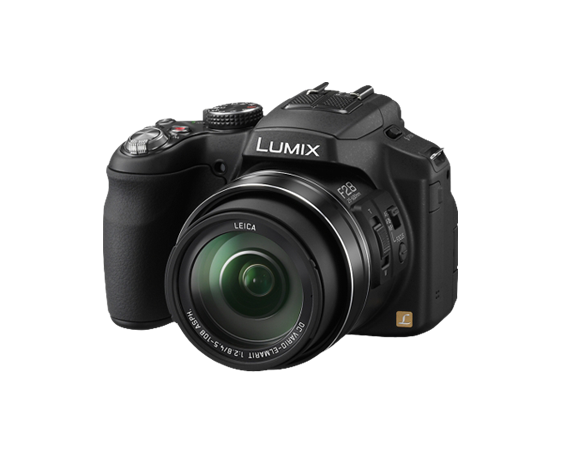
I already have a Panasonic DMC-FZ200, so why bothering to buy another camera? Well, first of all, it is for my wife to take pictures when we are on holiday. And secondly, if we are not on holiday (which unfortunately is still most of the time), then I like to have a very small camera which I can easily take with me to my professional occupations (after all, I have to earn money to spend it on camera's). Then, why this Panasonic? Because I am quite happy with my FZ200. The 2.8 aperture over the whole range of the lens (25 - 600mm equivalent on a 35mm camera) is a very good start. The 24x optical zoom is not the best but really good. But what I am really fond off is the optical stabilization in this FZ200 camera.
So, what is in it for the TZ40? It is very small, so I can take it with me in my coat. Still a 20x optical zoom. Not bad for such a small camera. 1080P - 50fps. But what I really hoped for is an optical stabilization as good as in the FZ200. Well, I am certainly not disappointed. This good optical stabilization means that it gets a lot harder for my wife to take a worthless picture. And for me? I still like to record video. Everywhere.
Does it help? Sure it does. For taking video it works incredibly well. For instance, filming from inside a moving car will introduce a constant moving of the camera. Will it make the footage shaky? No. What you will see is that the foreground (you car's dashboard and window) is moving up and down, but the outside world is not. Amazing to see. Just take a look at the video I took during my flight from Amsterdam Schiphol Airport to London Heathrow, just going over the centre of The City. You will notice that the window and especially the dirt on the window will move constantly while the subject, the outside world, is reasonably shock free and far from shaky. However, be careful with a horizontal pan. Because of the optical stabilization the camera tries to prevent this, causing small jumps in the panning.

Buying a camera depends on what you like to spend on it, but equally important on what you like to achieve with it. I can now record quit good video. Always. Everywhere.

Flight KL1006 over The City (of London)


Friday, 13 September 2013

Emirates Airbus A380-800 flight from Amsterdam to Dubai


Flying with Emirates from Amsterdam to Dubai in a brand-new Airbus A380-800 is an experience. A pleasant experience.
All luxury on board: shower spa, lounges and even a private suite!
Ok, ok. The Economy class is not bad either. With more space for your legs and less noise than other commercial aircrafts, travelling with this A380 is much more relaxed. The inflight entertainment system is comprehensive and the seat in front of you contains connection points for a headphone, USB and even 110V, enabling me to load the battery of my tablet (not possible via USB).
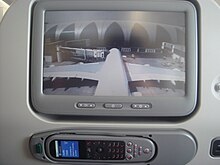
This A380 is equipped with three outside video
cameras from which you can select the view on your own monitor screen: a view from the front, from the bottom and from the tail. The downwards view is interesting, particularly during take off and landing. The front view is like the view from the cockpit. Looking at the view from the tail of this aircraft you get a feeling of how huge this aircraft is, especially when taxying towards the terminal building.
Despite its size and powerful engines, the noise level of the A380 meets the strict new ICAO Stage Four noise level standards (meaning less noise) and the A380 burns up to 20% less fuel per seat than its nearest competitor, given the seat capacity for between 489 and 517 passengers. A very impressive and, above all, convenient aircraft.

See Emirates A380 for more information.

Watch the video of the take off from Amsterdam Schiphol Airport and the ascending over Amsterdam city:

Sunday, 11 August 2013

What load is handled by a Telehandler?


One of my companies (JointSystems) is specialised in on-board scale solutions for commercial and agriculture vehicles, but also for wheel loaders and telehandlers. While others in this company know everything about the nuts and bolts of those vehicles I am specialised in the bits and bytes of the micro processors we use. With proper sensors you can measure pressure and calculate a weight. With intelligent software you can turn weight into business information.
LoadController E-Series Display
Now for the part of the software, low level input of sensors is required, collected data is processed and communicated between processors and stored in non-volatile memory. A dedicated PC program can download the data from the micro processor into a database, enabling reports based on period, vehicle, customer and load type. You see, this goes far beyond just a scale and weight.

The nice thing of such a versatile product is that it can be used by so many different types of businesses and visiting such companies enriches my world. This week we did an installation of a JointSystems LoadController on a telescopic handler, or telehandler. Looking at the pictures you get the idea. The company is involved in fertiliser, transport, distribution and all kinds of agriculture related contracting. Agriculture is a bit differing from my (computer) world so I was amazed by the different types and size of some of the agricultural vehicles. For instance, in the Netherlands it is not allowed anymore to just spread fertiliser over the soil, but it must be injected into the soil. Other vehicles are used for the flipping and collecting of hay, or the collection and processing of grain. For some more pictures of these vehicles look here.

Anyway, we did a great job with the supply of a new on-board weighing system in a telehandler. All their trucks are already accommodated with a JointSystems solution, but now we can welcome a happy driver in a telehandler as well.

See the video where the telehandler vehicle is calibrated and the driver is trying out the new installation:

Saturday, 3 August 2013

What to do with shaky, shitty video

Of course we all shoot perfect video. We use a tripod, check lighting and sound and not often we have to fix something in post. Now imagine a colleague or friend asking us for a favour. They know we can make good videos, not realising it all starts with quality shooting. But OK, we do them a favour, we say yes (but think no). And now the problems really start. Just a bunch of video files, at first glance resembling the latest shootings from a war zone. But no, they are shot while taking part in the new hobby, enthusiastically waving the camera to the other contenders. Really beyond "warp-stabilisation". You get the idea.

In my case it gets a serious undertone, because the boss has started sponsoring the hobby. Nothing wrong with that, but even while it is sponsoring a hobby, a boss does like to have some return on investment. So, I don't want to disappoint nobody and start right away. With questioning for more. No, not for more sponsoring, but for more footage. This is of course hard for the video takes, but since we are now talking about business, we may add business. So I ask for photos. Photos from the office building, a flag, sign, logo, whatever.

By the way, the sponsoring is about mountain biking. No, not the bikes. The shirts. So I ask for photos of the shirts.  I get an image of the design of the shirt and I get several photos of the guys (sorry, no ladies. I would have preferred ladies) wearing a shirt. And this brings me to the clue of how to make something of shaky, shitty video. Of course, it depends on the subject, but

  • Keep it short.
  • Use stills (The advantage of photos is not being shaky. But make them move by zooming in or out slowly).
  • Find fast music to keep up with the pace.
  • Use simple video adjustments to improve the quality. I very often use the "levels-adjustment" enabling the background of a darker picture be better visible. 
  • Make a fast edit, quickly changing from one cut to the other. Of course, you choose the takes that are the least shaky, but by quickly changing between shots and keeping them short, you can hide a bit that they are shaky and shitty.
I am very sorry to have to say that YouTube did not like the audio of my sample video, so I apologize for the following link not working anymore.

So, look here for the result of my - KLS sponsors mountain bike team - video.

Wish you all success with "your" shaky and shitty video.
If you have similar challenges or solutions, let me know.


Tuesday, 30 July 2013

Southwest USA Travelogue - Joshua Tree National Park

You know that feeling? Demolished? Did anybody say jet-lag? We go for the Starbucks revival experience.
At 8.30 AM we are waiting outside for the included transfer to the RV-rent-office. 8.50 AM. Nothing happens except for the arrival of a limousine. A Chinese driver, must be mafia.
"Cruise America?" he asks. (Oh sorry, nothing said). "The limousine, cause I'm late". It sounds so logic. Ready for camping with a RV, transfer by limousine. Best, why not? A nice lady shows us around in our new home for the coming weeks. An extensive video instructs what to do and how (to get rid of the sht) and what not to do (never drive backwards without somebody outside). Several forms to fill in, credit card and off we go. First to a nearby Walmart. For us everything here is big. The Walmart, the packaging, the people. Lots of things to buy. Cheese, butter, toilet paper, Californian wine for just 2$. Not bad, but after paying we are over $150 poorer anyway.

OK. And now we really go. GPS directed to a camp site in Yucca Valley, not far from Joshua Tree National Park. High ways, 6 lanes, 5 lanes, lot of concrete, condition not too good. The navigation shows the lanes we can keep in green. Handy, sometimes we get an extra lane, sometimes we lose two. The further we get from LA, the less cars on the road, the less lanes, the better the road condition. (Huh?) Every now and then we feel the wind, seems to  
be normal here. We see lots of wind mills, hundreds of them. At the camp site the office is open, nobody is there. A sign reads: "Find yourself a place, back in a moment".
Very carefully we park in backwards and we attach the water and the 110 V. Yes, we got light. When we are all settled we have to disconnect again and find our selves a nice steak.
Back at the camp site we talk to some nice people. A lot of older Americans are travelling with their own RV. These guys know Holland but what for, I don't recall. We immediately receive a book about "Earthing". Nice gesture. Still have find out what it is about. Jet-lag. At 8.30 PM it is over and out.

Breakfast at 07.00 AM and we are heading for the Joshua Tree National Park visitors center. We buy a year ticket for all national parks for $ 80, so 4 parks and we're break even.Via the west entrance we enter the park. What a wonderful landscape, full of Joshua trees. According to legend, Mormon pioneers considered the limbs of the Joshua trees to resemble the upstretched arms of Joshua, leading them to the promised land. Actually, I think they are just big Yucca's. Some rock hills
seem to be built up completely of separate stones. There are not many vehicles in the park. Halfway we take an exit to the right, notwithstanding a warning that the road is narrower. No problem for our RV. From the parking we walk to the viewpoint. What a magnificent sight. With a clear sky it must be possible to look into Mexico. We cannot look that far, but the nearby city of Palm Springs, at the opposite side of the valley and at at the foot of the mountains, is 31 kilometers away! The San Andreas Fault line runs through this valley. Because of a warning for aggressive bees we don't stay to long. 

On our way to the northern entrance of the park we pass Skull Rock.

This is our first National Park and we are already very impressed.

For my video impression look at


DTAP, a route to Application Lifecycle Management

Modern software should be viewed as a living asset, with a lifecycle that spans the activities that represent the entire lifetime of the product, from identification of business requirements through development, testing, deployment, support, and maintenance, right up to the eventual retirement of the application.

When we want to structure Application Lifecycle Management we need not only thinking in procedures but as well, or may be even more important, we need investing in the complete environment that can support us in this process, including all hard and software tools.
To support the process of Application Lifecycle Management, in this document we will look at implementation possibilities of the so called DTAP environment, i.e. (software) Development, Testing, Acceptance and Production.

Let's have a look at the functional requirements for a DTAP environment.

Development Environment
In this environment, the components (program modules) are programmed and the component tests and component integration tests are carried out. Part of the software development process is as well specifying what to develop. Functional, Detailed, Technical and Release Documentation are all part of this process. All (version-ed) information, including the source code, must be well organised, easily searchable and accessible. Developers need a modern Integrated Development Environment (IDE). “Integrated” should include (but not be limited to):

  • Writing and debugging software
  • Unit testing
  • Source Control
  • Build Server
  • Version-ed documentation
  • Collaboration with other stakeholders
  • All related information easily searchable and accessible.

Test Environment
Testers are key members of the development team and test activities should be completely integrated into the software development process. Ideally the same IDE is used by testers, just using other views and tools.
The testers IDE should include (but not be limited to):
  • Create test plans and perform tests.
  • Create “test labs” in order to test applications in multiple environments. Each lab contains its own databases (automatically) filled with all relevant configuration and functional data. A lab may also include relevant hardware. Configuration or even firmware may be different for each lab.
  • Create virtual test environments quickly, deploy the application, and then complete automatic tests.
  • Reporting bugs.
  • Recording of steps that cause unexpected behavior.
  • Generate test cases based on the steps that caused the bugs to appear.
For system integration testing, the test environment is linked with all interacting test environments of systems involved. This includes all hardware and software.

Acceptance Environment
Ideally, the acceptance test environment should be a copy of the production environment. All systems that operate in the production environment are installed and, if necessary, active. The databases contain actual data, anonymously transferred from the production environment (if possible).
In the Acceptance environment, Support & Operations personnel may validate all information in order to establish whether the system can be put into use. Customers may even play a role in this.
For the Support & Operations department the Acceptance Environment is the first step towards the Production Environment, towards going live.
Within the Acceptance Environment Support & Operations must be able (but not be limited) to:
  • Create and document release procedures
  • Setup an Acceptance Environment resembling a particular Production Environment
  • Different Acceptance Environments can be used to test one release based on different Production Environments.
  • Test the installation and release of software before installation on a production side.

Production Environment
This is the environment in which all programs are eventually installed. No tests are performed in this environment. Normally, customers take care of the Production environment.
This said, it is of the utmost importance to be accurately informed about erroneous situations in a live system. Support & Operations is the first contact for customers with operational problems. To help Support & Operations with their tasks the Production Environment should support (but not be limited to):
  • Exception reports
  • Performance reports
  • Recording and capturing the sequence of events that caused a bug and to store trace information, together with the appropriate environmental data.
Furthermore, Support & Operations must be able to:
  • Have access to all relevant documentation
  • Report bugs, including all relevant information gathered
  • Report other observations to the development team for analysis and triage.
Ideally the software tools for Support & Operations are integrated with all other tools for software development, testing and acceptance.

The DTAP Environment Implemented
For all but the most trivial of solutions, application development is a multidisciplinary exercise that encompasses a wide variety of tasks and participants. The principal aim of any software development effort is to deliver a quality application that meets the customers’ requirements in a timely and cost-effective manner. However, there are many obstacles that can get in the way of any development team. Many of the problems are caused by a lack of clear and effective communication among developers, project managers, and customers. Other problems may result from a lack of discipline that occurs when developers and project managers misuse or misunderstand the development process. Consequently, adaptable and easy-to-use tooling is critical to help overcome the issues that can arise when producing a potentially complex system.

Visual Studio 2012 and Team Foundation Server help to address these concerns by supplying a collection of tightly integrated tools to support and manage the entire Application Lifecycle.

The primary aims of Visual Studio 2012 and Visual Studio Team Foundation Server 2012 are to:
  • Prioritize collaboration among everyone involved in developing an application, incorporating customers as equal members of the development team. 
  • Deliver timely and actionable feedback to reduce wasted effort and its associated costs.
  • Provide natural and appropriate tools for the tasks involved in designing, developing, testing, delivering, and maintaining quality software.
  • Support best practices for application development, while remaining independent of any specific methodology.

For more information look at